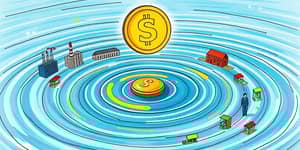
For many families, the rise in home values and stock prices can feel like a ray of opportunity, promising new possibilities and fresh hope for the future.
Understanding how these shifts translate into real-world spending empowers households and shapes economic policy across communities.
Definition and Core Concept
The wealth effect captures the relationship between asset values and consumer behavior. When people see rising asset prices—whether in stocks or homes, they often feel more confident, leading to higher spending on goods and services.
This phenomenon links asset markets to demand, creating ripples through the economy that can support growth or magnify downturns when values fall.
Key Mechanisms: From Stocks to Homes
Two primary channels drive this effect: the psychological boost of feeling richer and the practical ability to borrow against owned assets. Financial wealth—stocks, bonds, and savings—tends to unlock more immediate spending than housing wealth, though both play crucial roles.
- Financial wealth: stocks, bonds, savings
- Housing wealth: home equity, perceived security
- Psychological versus actual channels of spending
As mobile apps display daily portfolio gains, the so-called Smartphone Effect phenomenon can spur consumers to splurge on everyday luxuries, even without liquidating their assets.
Measuring the Impact: Marginal Propensity to Consume
Economists quantify spending reactions using the marginal propensity to consume (MPC), a metric that tracks how much of each extra dollar gained in wealth is turned into consumption.
These figures suggest that a sudden stock market rally or a surge in home prices can inject billions into consumer spending, fueling economic expansion and job creation.
Historical and Recent Examples
In the roaring 1990s, Americans witnessed a thriving stock market that lifted confidence and spending. Studies found each additional dollar of stock wealth yielded over four cents in consumption in the long run, contributing to a $66 billion surge in spending by 2000.
After the Great Recession, housing price gains were uneven. Wealthy households claimed a disproportionate share, muting the broader recovery and slowing spending growth. By 2019, uneven wealth distribution among households explained nearly 90% of the weak consumer response.
From 2020 to 2024, U.S. household net worth soared to $169 trillion. Yet, when markets dipped in 2022, spending fell by 7% among equity holders, demonstrating the fragile link between markets and spending that can unsettle businesses and families alike.
Wealth Inequality and Broader Impacts
Not all families feel the same boost from rising assets. High-income households, holding the bulk of stocks and home equity, drive most spending increases, while lower-income families see little uplift.
- Concentration of gains in the top quintile
- Lower spending sensitivity among the affluent
- Local employment echoes luxury consumption
When wealthy consumers dine out or travel, service sectors flourish and jobs are created. But when markets correct, these industries contract sharply, illustrating the double-edged nature of asset-driven demand and its ripple effects on communities.
Policy Considerations and Future Outlook
Policymakers monitor the wealth effect closely. Rising markets can bolster economic stimulus by lifting spirits and wallets, but they also complicate monetary policy when asset gains diverge from wage growth.
Critics warn that overreliance on asset booms may deepen inequality. To foster resilience, many advocate expanding asset ownership through targeted credit programs, homeownership support, and financial literacy initiatives.
By broadening the base of asset holders, the benefits of rising wealth can be shared more evenly, reducing vulnerability and strengthening aggregate demand.
Practical Takeaways for Consumers
Households can harness the wealth effect responsibly to secure their financial futures:
- Maintain a balanced portfolio to weather market corrections
- Avoid overleveraging home equity beyond safe limits
- Focus on long-term financial planning and literacy
- Invest with resilience, not just chasing short-term spikes
Understanding how perceived wealth shapes spending behavior allows individuals to make informed choices that protect their stability and growth.
Conclusion
The wealth effect underscores the powerful role that asset values play in shaping consumer actions and economic dynamics. From the confidence boost of a rising stock market to the borrowing power unlocked by home equity, these mechanisms echo across households and economies.
Yet, the uneven distribution of assets means only some reap the full rewards. Bridging the gap between asset-rich and asset-poor will be crucial to building a more inclusive, stable future where prosperity touches every corner of society.
By recognizing both the promise and the pitfalls of the wealth effect, consumers, businesses, and policymakers can chart a path that harnesses these forces for broad-based well-being and lasting growth.
References
- https://fiveable.me/key-terms/ap-macro/real-wealth-effect
- https://www.marketplace.org/story/2026/01/15/how-the-wealth-effect-is-shaping-the-economy
- https://www.federalreserve.gov/econres/notes/feds-notes/wealth-heterogeneity-and-consumer-spending-20250805.html
- https://en.wikipedia.org/wiki/Wealth_effect
- https://usa.visa.com/partner-with-us/visa-consulting-analytics/economic-insights/the-sudden-increase-in-the-wealth-effect-and-its-impact-on-spending.html
- https://www.nationwide.com/financial-professionals/blog/markets-economy/articles/how-much-is-the-wealth-effect-propping-up-economic-growth
- https://www.retaildogma.com/wealth-effect/
- https://cressetcapital.com/articles/market-update/3-19-25-understanding-the-wealth-effect/
- https://www.nber.org/digest/aug19/new-estimates-stock-market-wealth-effect
- https://ritholtz.com/2025/10/revisiting-the-wealth-effect/