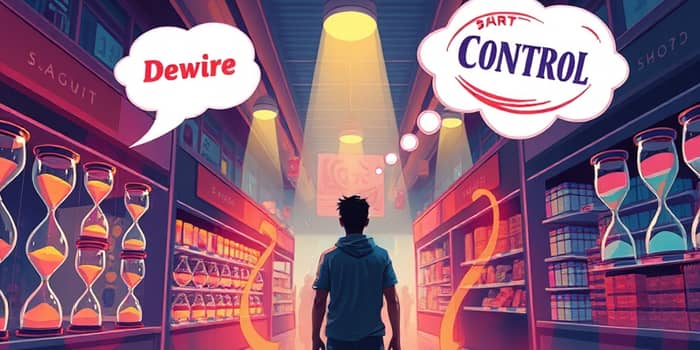
Scarcity surrounds us in modern life: limited-time offers flash across our screens, banners warn of "low stock," and deals vanish in hours. These cues exploit deep psychological triggers, leading even the savviest shoppers into impulsive traps. Yet, the same scientific insights that explain this behavior can empower us to resist it. In this article, we explore the neuroscience, biases, real-world examples, and practical strategies to help you regain control and transform urge into intentional action.
Understanding the Psychology Behind Scarcity
At its core, scarcity taps into instant fear of missing out, activating the brain’s reward and threat circuits simultaneously. Research shows that when products are labeled as “limited,” individuals experience heightened anxiety and anticipatory excitement, driving them to buy quickly. This reaction stems from psychological reactance: the perception that our freedom is under threat, prompting us to act to restore autonomy.
Cognitive biases intensify this effect. The scarcity heuristic leads us to assume that rare items are superior, regardless of quality. Anchoring fixes our valuation at a high reference point, making discounts seem more attractive. Meanwhile, scarcity imposes a mental tax: studies report a cognitive load measure of M = 4.09 under scarcity versus M = 3.21 in neutral conditions, accelerating decisions and sidelining deliberation.
Neuroimaging confirms these findings. Scarcity cues light up brain regions tied to reward processing and emotional arousal. The combination of thrill and anxiety heightens urgency, while an above-average effect for competitive behavior kicks in when we perceive others vying for the same prize.
Emotional Triggers and Behavioral Patterns
Emotions are the engine of impulse spending. The excitement of a fleeting opportunity, the perceived product value skyrockets under scarcity, and the thrill of “winning” push us beyond rational limits. Anticipated regret magnifies urgency: the thought of missing out feels more painful than any post-purchase remorse.
Social proof amplifies these feelings. Seeing a progress bar fill or empty shelves confirms our desire. Small wonder that shoppers hoard items, engage in sneaky hiding tactics, or rush to check out before others snatch the last piece.
Individual traits further shape our responses. Consider:
- High competitiveness driving hoarding and secret stockpiling.
- Hedonic shopping motivation fueling emotional buys.
- A strong need for uniqueness prompting deviant acquisition behaviors.
And the cycle repeats: the more we indulge, the more we seek that next adrenaline spike, creating a precarious loop of short-lived satisfaction.
Long-Term Consequences of Impulse Spending
Impulse buys might deliver a momentary high, but the aftermath often includes regret, wasted budget, and eroded trust in brands. Habitual deal hunters can become locked into a scarcity cycle, scanning for the next flash sale rather than evaluating true needs.
Chronic exposure to scarcity cues can rewire our decision-making. Research suggests that prolonged scarcity mindsets narrow our focus—tunneling on immediate rewards and compromising long-term goals. This shift undermines our ability to delay gratification and fosters variety-seeking as a misguided attempt to reclaim freedom.
Over time, loyalty built on scarcity tactics can backfire. While consumers may initially appreciate exclusive offers, repeated manipulation breeds skepticism. Post-purchase regret spikes, and trust dissolves, leaving both shopper and seller worse off.
Practical Strategies to Regain Control
Understanding the science is vital, but action is transformative. Here are proven methods to counter impulse spending and nurture mindful purchasing:
- Train your mind to pause when you encounter scarcity cues. Before clicking “buy now,” count to ten or step away.
- Restore mental bandwidth for better choices by setting clear budgets and shopping lists in advance to reduce decision fatigue.
- Recognizing marketing tactics behind scarcity helps you see “limited stock” for what it is—a sales tool, not a value statement.
- Build habits that foster patience through delayed gratification exercises, like waiting 24 hours before major purchases.
- Reframe scarcity as a prompt for alternatives. Seek out non-scarce brands or comparable products to avoid forced decisions.
Mindfulness practices can further bolster your defenses. Daily reflection on spending triggers, paired with journaling, illuminates patterns and breaks emotional loops. Over time, you’ll train your mind to recognize the subtle pull of scarcity and respond with deliberate choice rather than instinctive reaction.
For marketers committed to ethical engagement, balancing scarcity within a broader framework of transparency and genuine value is key. Using controlled, appropriate scarcity—paired with honest messaging—can build trust, foster loyalty, and stimulate responsible consumer behavior.
By combining insights from neuroscience, psychology, and real-world examples, you equip yourself with practical, long-lasting strategies to thrive in a world built on fleeting opportunities. Embrace awareness, cultivate patience, and reclaim the freedom to choose—transforming scarcity from a trap into a catalyst for intentional living.
References
- https://digitalcommons.unl.edu/cgi/viewcontent.cgi?article=1045&context=businessdiss
- https://braintrustgrowth.com/the-scarcity-effect-how-limited-offers-activate-the-brains-urgency-signals/
- https://www.pioneerpublisher.com/jwe/article/view/1095
- https://www.webhaptic.com/understanding-scarcity-and-urgency-in-retail-consumer-behavior-3/
- https://www.leadalchemists.com/marketing-psychology/scarcity-effect/
- https://cognitive-clicks.com/blog/what-is-scarcity-principle/
- https://www.journals.uchicago.edu/doi/full/10.1086/710531
- https://business.sparklight.com/the-wire/marketing/tactics-strategy/scarcity-effect-how-limited-availability-drives-demand
- https://www.newneuromarketing.com/mastering-scarcity-unveiling-the-psychology-and-impact-of-scarcity-marketing-cues-on-consumer-behavior
- https://marketingcourse.org/the-power-of-scarcity-and-urgency-behavioral-economics-in-marketing/
- https://pmc.ncbi.nlm.nih.gov/articles/PMC10242224/