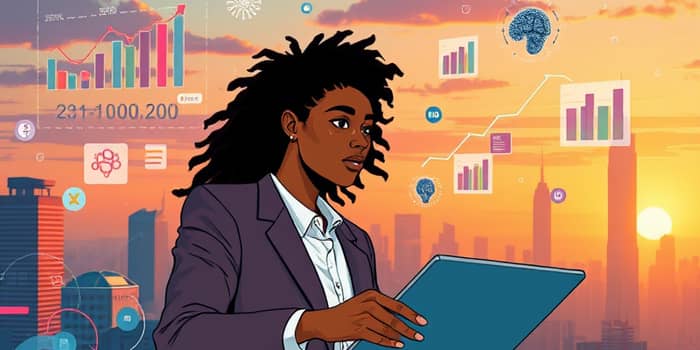
The world of work is on the brink of a profound transformation, driven by AI-driven disruption and workforce redesign. By 2026, these changes will require a complete overhaul of how we approach our careers and finances.
Organizations are rapidly integrating AI, leading to job automation and role evolution that threaten traditional income stability. This shift demands proactive financial planning to navigate uncertainty.
To thrive in this new era, individuals must embrace financial adaptation strategies such as upskilling budgets and diversified income streams. The future is not just about technology; it's about human resilience.
Major Workforce Trends Shaping 2026
Understanding these trends is crucial for financial preparedness. They highlight the intersection of work and money.
- AI Integration and Job Redesign: Tasks are split between humans and AI, with upskilling becoming essential for survival.
- Skills Gap and Upskilling: 39% of current skills will be disrupted in five years, emphasizing continuous learning.
- White-Collar Decline, Blue-Collar Rise: Entry-level professional jobs are shrinking, while sectors like infrastructure boom.
- Management and Leadership Shifts: The "Great Flattening" reduces managers, with informal leadership gaining traction.
- Talent Models Evolve: Fluid talent pools blend full-time and gig workers, making side hustles mainstream.
- Return-to-Office Dynamics: Hybrid models prevail, with personalized approaches to office use.
- Human-Centric and Ethical Focus: Low engagement rates underscore the need for wellness and ethical AI.
- AI in HR and Development: AI-driven coaching scales, and HR structures are being restructured.
- Productivity and Engagement: AI productivity gains are reported, with professional development driving engagement.
These trends signal a rapid evolution in work environments that directly impact financial security.
AI Integration and Its Financial Impact
AI is transforming workflows at an unprecedented pace. Organizations are breaking tasks into human and AI assignments to boost efficiency.
Foundational workflow data is essential for success. Without it, AI implementations can fail, leading to wasted investments.
Gartner predicts over 50% of enterprise generative AI will be domain-specific by 2027. This deep integration means AI will shape specific industries.
Blunt automation frees more than 120 hours per employee yearly. These hours are often reinvested into core functions, enhancing productivity.
Investments in AI are substantial, with 80% aimed at redesigning business functions. This underscores the strategic importance of AI in the workplace.
For individuals, this means upskilling is non-negotiable. Budgeting for training can mitigate income risks from obsolescence.
Skills Gap and the Need for Continuous Learning
The skills gap is widening, with only 54% of workers using AI last year. Daily users report higher productivity and job security.
Demand for human skills like analytical and creative thinking will grow 26% by 2030. Soft skills are increasingly valued by employers.
To adapt, prioritize investments in learning. Consider these key areas for development.
- Analytical and creative thinking
- Resilience and flexibility
- Communication and leadership skills
- AI literacy and technical proficiency
Developing these skills can enhance your earning potential and job stability in a competitive market.
Job Shifts and Income Diversification
White-collar entry roles in finance, law, and consulting are eroding. Meanwhile, blue-collar sectors like energy and trades are booming.
A slowing economy and rising unemployment amplify this shift. It creates volatility that requires financial agility.
Side hustles are becoming mainstream for income diversification. They offer a buffer against job loss and skill gaps.
Employers are recognizing this trend, with supportive policies emerging. Building multiple income streams is now a strategic move.
Here are practical ways to diversify your income.
- Explore freelance or gig work in your field
- Start a side business based on your skills
- Invest in passive income sources like dividends
- Leverage online platforms for additional revenue
Diversification mitigates risks associated with job instability and economic pressures.
Financial Implications Table
This table summarizes how workforce trends translate into financial actions.
This table highlights critical connections between trends and financial planning, guiding proactive steps.
Management Shifts and Leadership Evolution
Management roles are declining by 6% globally in three years. The traditional career ladder is eroding, with 70% of Gen Z preferring individual contributor roles.
Informal and distributed leadership often outperforms formal structures in vision and communication. This shift requires new skills for career advancement.
Fractional executives, or "turnarounders," are rising in popularity. They offer flexible leadership solutions for organizations.
For finances, this means adapting to less hierarchical career paths. Savings for career transitions become essential.
Hybrid Work Models and Financial Considerations
Hybrid work is the new norm, with personalized approaches to office use. Offices are becoming collaboration hubs rather than daily workplaces.
This model offers benefits but also financial implications. Consider these aspects.
- Flexibility in work location and hours
- Reduced commute time and costs
- Improved work-life balance
- Costs for home office setups and occasional commutes
Managing these expenses can enhance your financial efficiency and overall well-being.
Human-Centric Focus and Wellness Costs
Global engagement is low at 21%, according to Gallup. This highlights a human-centric issue that impacts productivity.
Wellness trends are emerging, with a focus on mental health. Budgeting for healthcare and wellness is crucial in this environment.
Ethical AI oversight is lacking, with 58% of employees seeing challenges. Only 26% of organizations have prepared leaders.
Reputational fallout from under-governed AI can affect job security. Emergency funds provide a safety net during such crises.
Practical Financial Adaptation Strategies
To secure your financial future, implement these strategies now. They are grounded in the trends discussed.
- Income Diversification: Build multiple streams through side hustles and gig work to cushion against job loss.
- Upskilling Investments: Allocate funds for training in AI and human skills to stay relevant and competitive.
- Savings and Security: Boost emergency funds to cover three to six months of expenses; adjust retirement plans for gig economy volatility.
- Healthcare and Wellness Costs: Budget for mental health services and rising healthcare expenses to maintain well-being.
- Remote and Hybrid Expenses: Manage costs for home office equipment and occasional commutes to optimize finances.
These steps can build a resilient financial foundation in the face of work changes.
Steps to Take Immediately
Start adapting today with these actionable steps. Proactivity is key to financial security.
- Assess your current skills and identify gaps for upskilling.
- Create a budget that includes training expenses and side hustle investments.
- Explore diverse income opportunities, such as freelancing or online ventures.
- Review and strengthen your emergency savings to handle job volatility.
- Update retirement plans to account for self-employment or gig work scenarios.
- Stay informed about workplace trends and adjust financial strategies accordingly.
Taking these actions now can position you for success in 2026 and beyond.
Conclusion
The future of work in 2026 is not just about surviving change but thriving through it. By understanding key trends and adapting your finances, you can build a resilient and prosperous future.
Embrace a human-centric approach to work and finance, focusing on skills, diversification, and security. The journey requires continuous learning and proactive planning.
As AI amplifies human work rather than replaces it, your financial adaptability will be your greatest asset. Start today to secure tomorrow.
References
- https://mexicobusiness.news/talent/news/workforce-wellness-trends-2026-what-expect
- https://www.dayforce.com/blog/10-workforce-trends-for-2026
- https://www.prsa.org/article/6-workplace-trends-shaping-2026-jan26
- https://hrexecutive.com/what-will-define-work-in-2026-9-predictions-every-hr-leader-should-be-watching/
- https://www.tmi.org/blogs/the-future-of-work-11-hr-trends-every-chro-must-know-in-2026
- https://www.dhrglobal.com/insights/workforce-trends-report-2026/
- https://www.fidelityworkplace.com/s/article/workforce-trends