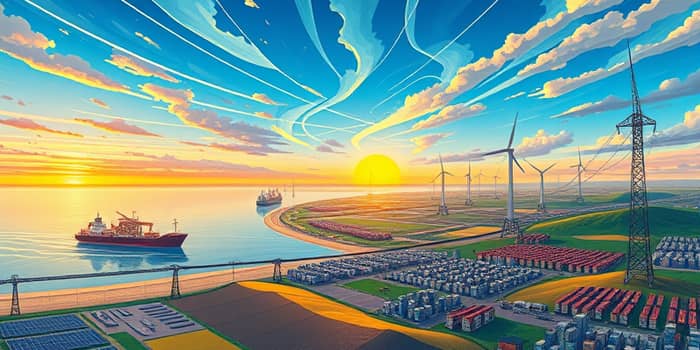
The global energy landscape is in constant flux, driven by shifting alliances, technological innovation, and the urgent need for sustainability. From Middle East tensions to cleantech breakthroughs in Asia, every development ripples through oil, gas, power, and renewables markets. Understanding these forces is crucial for businesses, investors, and policymakers alike as they navigate an era of rapid transformation and navigating market volatility and risk.
How Geopolitics Shapes Energy Markets
Geopolitical dynamics remain one of the most potent influences on energy supply and pricing. Major actors—the United States, China, Europe, and OPEC+—vie for strategic advantage through diplomacy, sanctions, and industrial policy. US efforts to remove leadership in Venezuela aim to boost crude output, while European sanctions on Russian fuels have accelerated a shift toward renewable energy sources and alternative suppliers.
At the same time, China leverages its dominance in cleantech supply chains—lithium, cobalt, and solar panels—to wield economic and diplomatic influence. OPEC+ decisions to unwind production cuts in 2Q26 will add roughly 1.0 million barrels per day, pressuring prices downward. Yet persistent sanctions on Iran, Russia, and Venezuela cap downside potential, ensuring that markets remain ever-sensitive to political developments.
Oil Prices and Supply-Demand Dynamics
Global liquids supply is forecast to increase by 2.5 million barrels per day, outpacing demand growth of 1.8 million barrels per day. With supply outstripping consumption by 0.7 million barrels per day, Brent crude is projected to average $59 per barrel in 2026—$10 below 2025 averages—while WTI trades in the $55–65 range.
Emerging demand drivers include robust consumption in India and the Middle East, expansion of petrochemicals and jet fuel markets, and strategic purchases for China’s strategic petroleum reserves. OPEC+ production changes, combined with potential relief of Russia sanctions, will determine pricing floors, even as new US shale volumes continue to ramp up.
Natural Gas and the LNG Glut
Natural gas markets are experiencing a supply glut, with global LNG exports rising by 29 million metric tons in 2026. Despite 5% demand growth—driven by China and India infrastructure expansions—spot prices in Europe and Japan are expected to hover around $12 per MMBtu, two-thirds below 2022 peaks.
Henry Hub pricing is forecast at $3.50–4.50 per MMBtu, as US LNG export capacity grows by 13.5 billion cubic feet per day by 2030. This surplus has compressed regional premiums and created fierce competition among suppliers, underscoring the importance of diversify energy supply and demand in long-term planning.
Power Prices and the Renewables Revolution
Renewable energy additions—particularly solar—are driving zero or negative wholesale power prices in markets like Germany and Spain. European PPA indices now sit below solar generation costs, highlighting thin margins and volatility for traditional generators.
In Japan, baseload power prices are falling by 5.1% to ¥11.4 per kWh in 2026 amid flat overall demand. China’s solar additions slow to 200 GW from 300 GW in 2025 due to policy shifts toward competitive bidding, adding upward pressure on global equipment prices and emphasizing the need for strengthen grid infrastructure and resilience.
Cleantech, Renewables, and Emerging Fuels
These developments signal a transition to a low-carbon economy driven by technology and policy. As costs for battery storage drop by more than half over two years, more than 90% of new renewables are now cheaper than fossil alternatives, further accelerating the shift.
Demand Drivers and Infrastructure Needs
Digitalization, AI, and electrification are straining existing power grids. The United States and Europe face costly grid expansion and modernization challenges, requiring nearly €1 trillion in investment by 2030. Natural gas power demand is projected to rise by 6.0 bcf/d over the decade, underscoring the importance of embracing renewable energy and storage alongside conventional generation.
Utilities and industrial consumers alike must adapt, reinforcing local networks and integrating distributed energy resources. Governments and investors can foster resilience by supporting critical mineral onshoring, fostering public-private partnerships, and implementing robust demand-side management programs.
Investment Trends and Economic Outlook
Cleantech spending has surged 30% over five years, with the majority directed to Asia. Upstream oil and gas spending remains flat, down 4.2% in North America and slightly lower internationally. Projects now prioritize execution excellence, cost control, and resilience to supply disruptions.
Amid economic uncertainties, affordability remains a top concern. Clean energy technologies offer cost declines and carbon benefits, but require sustained policy support and market stability. Investors should focus on firms with diversified asset portfolios, strong balance sheets, and clear strategies for investing in sustainable and resilient infrastructure.
Risks, Uncertainties, and Strategic Responses
The energy sector faces multiple risks: geopolitical flare-ups in Ukraine, Iran, and Venezuela; extreme weather events driven by climate change; and shifting policy winds in major economies. Oversupply in oil, gas, and power markets could persist even as demand slowly recovers.
To navigate these uncertainties, stakeholders can adopt several practical measures:
- Enhance risk management by stress-testing portfolios against geopolitical scenarios.
- Allocate capital to strategic competition between global powers intelligence and monitoring capabilities.
- Diversify energy sources by integrating renewables, storage, and flexible gas generation.
- Support grid modernization and digitalization to improve reliability and flexibility.
Conclusion: Charting a Path Forward
The intersection of geopolitics and energy markets creates both challenges and opportunities. By understanding the complex interplay of supply, demand, technology, and policy, stakeholders can craft strategies that balance short-term resilience with long-term sustainability goals.
Embracing innovation in cleantech, strengthening infrastructure, and fostering international cooperation will be critical. Whether you are an investor seeking stable returns, a policymaker designing supportive frameworks, or an energy user aiming to reduce costs and emissions, a clear vision and proactive planning are essential to thrive in this dynamic landscape. Together, we can accelerate the energy transition, enhance global security, and build a more resilient, prosperous future for all.
References
- https://www.woodmac.com/blogs/the-edge/five-themes-shaping-the-energy-world-2026/
- https://www.spglobal.com/energy/en/news-research/special-reports/energy-transition/horizons-top-cleantech-trends-2026
- https://gabelli.com/research/2026-outlook-energy-sector/
- https://energy-infrastructure-partners.com/five-trends-shaping-energy-infrastructure-in-2026/
- https://about.bnef.com/insights/commodities/commodities-in-2026-10-numbers-to-watch-from-power-to-oil/
- https://www.weforum.org/stories/2025/12/global-energy-2026-growth-resilience-and-competition/
- https://guidehouse.com/insights/trends-guide/2026/energy-providers
- https://rmi.org/the-energy-transition-in-2026-10-trends-to-watch/
- https://www.youtube.com/watch?v=mWL5Qt7J2LM
- https://www.bdo.com/insights/industries/natural-resources/2026-natural-resources-energy-predictions
- https://www.utilitydive.com/news/utility-power-sector-trends-2026/808782/
- https://www.eia.gov/outlooks/steo/