In our fast-paced global economy, few events can unravel stability as quickly as a supply shock.
This sudden disruption catches everyone off guard, from consumers to corporations.
It transforms markets overnight, often leading to stagflation where prices soar while output plummets.
Understanding supply shocks is not just academic; it is a practical necessity for survival in today's world.
They remind us of the fragility of our interconnected systems and the need for resilience.
By delving into their mechanics, we can turn uncertainty into opportunity.
This article aims to inspire and equip you with knowledge to navigate economic turbulence.
The Mechanics Behind Supply Shocks
At its heart, a supply shock alters the short-run aggregate supply curve.
This curve represents what producers are willing to supply at various price levels.
A negative shock shifts this curve leftward, reducing available goods.
This reduction forces prices up and output down, creating economic strain.
Conversely, a positive shock shifts the curve rightward, increasing supply.
This increase lowers prices and boosts production, fostering growth.
The distinction from demand shocks is crucial; supply shocks affect production capacity.
They stem from events that change how much can be produced, not how much is wanted.
To clarify the types, refer to the table below which summarizes key aspects.
This framework helps predict how different shocks will play out in reality.
It underscores the immediate impact on everyday life and business operations.
Causes: What Triggers a Supply Shock?
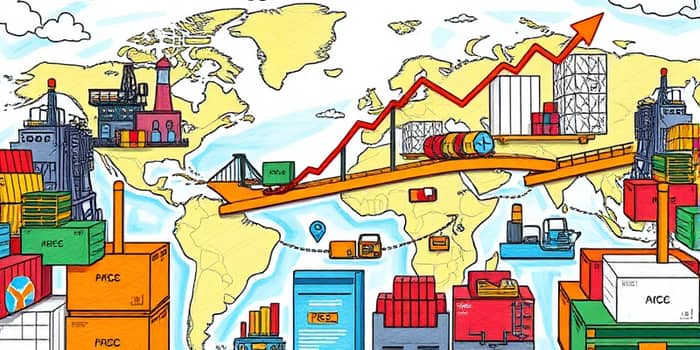
Supply shocks originate from disruptions in the intricate web of supply chains.
These chains link raw materials to finished products across the globe.
When broken, they can trigger widespread economic consequences.
The causes are diverse, ranging from natural events to human actions.
- Natural disasters such as earthquakes or droughts devastate agricultural yields.
- Geopolitical tensions like wars or embargoes restrict resource flow.
- Resource-specific issues, including oil shortages or rare earth limits.
- Positive triggers like technological breakthroughs boost efficiency.
- Other factors such as regulatory changes alter production costs.
Any event that raises production costs can induce a negative shock.
This makes economies vulnerable to a wide array of external pressures.
Understanding these triggers empowers us to anticipate and mitigate risks.
It encourages proactive measures in supply chain management.
Effects on the Economy: From Stagflation to Growth
The economic repercussions of supply shocks are profound and multifaceted.
Negative shocks often lead to challenging outcomes for societies.
- Firms face higher costs, resulting in reduced production and lower GDP.
- Consumers experience higher prices for essential goods like food and fuel.
- Unemployment rates can rise as companies scale back on labor.
- In severe cases, rationing may be implemented to manage scarcity.
Positive shocks, however, can catalyze economic prosperity and innovation.
- Lower production costs enable expanded output and higher GDP.
- Prices fall, increasing purchasing power and consumer confidence.
- Unemployment decreases as new jobs emerge in growing sectors.
The risk of stagflation is particularly high with widespread negative shocks.
This condition combines inflation with economic contraction, posing dilemmas for policymakers.
It challenges traditional economic models and requires creative solutions.
The Phillips curve illustrates trade-offs between inflation and unemployment.
Navigating these trade-offs is essential for sustainable economic health.
Historical and Modern Examples
History offers vivid lessons on the impact of supply shocks.
These events highlight both vulnerability and resilience in global economies.
- The 1973 Oil Crisis, where OPEC embargoes caused fuel shortages and stagflation.
- The 2021 Suez Canal blockage, a temporary disruption to international trade.
- The Russia-Ukraine war, leading to massive shocks in grain supplies.
- The COVID-19 pandemic, which disrupted supply chains worldwide.
- Positive examples like bountiful harvests that lower food prices sustainably.
Each example underscores the sudden and impactful nature of these events.
They remind us of the interconnectedness of modern production networks.
Learning from past shocks helps build more robust systems for the future.
It encourages investment in diversification and redundancy.
Policy Responses and Future Implications
Governments and central banks play a critical role in mitigating supply shocks.
Effective policies can stabilize economies and prevent long-term damage.
- Central banks may adjust interest rates to manage inflationary pressures.
- Governments can implement fiscal support for affected industries.
- Investing in supply chain resilience reduces vulnerability to future disruptions.
- International cooperation addresses geopolitical triggers and fosters stability.
The challenges are complex, requiring balanced approaches to inflation and growth.
Policymakers must weigh short-term fixes against long-term sustainability.
Embracing innovation, such as green technologies, can turn shocks into opportunities.
It promotes economic diversification and reduces dependency on volatile resources.
Conclusion: Building Resilience in a Volatile World
Supply shocks are an inevitable part of our economic landscape.
By understanding their mechanics, causes, and effects, we can better prepare.
Building resilient supply chains is essential for minimizing disruption.
It involves fostering flexibility and adaptability in production processes.
Embracing technological advances can enhance efficiency and reduce risks.
Collaboration across sectors and borders strengthens global economic stability.
Together, we can create an economy that withstands unexpected events.
Let this knowledge inspire action towards a more secure and prosperous future.
References
- https://fiveable.me/key-terms/ap-macro/supply-shock
- https://www.thestreet.com/dictionary/supply-shock
- https://en.wikipedia.org/wiki/Supply_shock
- https://study.com/academy/lesson/favorable-supply-shocks-scenarios-of-beneficial-changes-in-supply.html
- https://www.pearson.com/channels/macroeconomics/learn/brian/ch-21-revisiting-inflation-unemployment-and-policy/phillips-curve-and-supply-shocks
- https://www.economicshelp.org/blog/glossary/adverse-supply-side-shock/
- http://www.econport.org/content/handbook/Equilibrium/shocks.html
- https://study.com/academy/lesson/video/favorable-supply-shocks-scenarios-of-beneficial-changes-in-supply.html