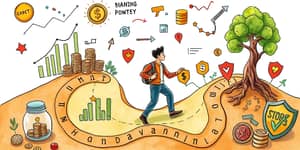
Inflation touches every aspect of our daily lives, from the groceries we purchase to the savings we build for the future. Understanding its roots and impacts empowers you to navigate economic uncertainty with confidence.
In this guide, we unpack complex data, explore real-world examples, and share practical strategies to protect your finances against the relentless rise of prices.
Understanding Inflation: The Basic Concept
At its core, inflation refers to the general increase in prices for goods and services over time. It represents a steady loss in purchasing power as your money buys less than it did in the past.
Economists measure inflation using indices like the Consumer Price Index (CPI) and the Personal Consumption Expenditures (PCE) price index. These metrics track price changes across a basket of everyday items, from housing and healthcare to food and energy.
How Inflation Erodes Your Purchasing Power
Consider a simple example: if you spent $100 on groceries in 2020, the same cart today might cost $120 or more, depending on the category. This shift illustrates how rising costs can strain household budgets.
When the inflation rate exceeds the interest you earn on savings, your effective wealth declines. For instance, a 2% interest rate on a bank account combined with 3% inflation means you lose 1% of value each year.
- Essential expenses like rent, utilities, and groceries often outpace wage gains.
- Savings accounts can become low, stable, and predictable inflation traps when interest lags behind price increases.
- Long-term goals such as retirement planning require adjusting for future cost growth.
The Real Impact on Wages and Income
While paychecks may grow in nominal terms, they often fail to keep pace with inflation. This nominal wages versus real earnings gap means workers face diminishing living standards even as salary figures rise.
Survey data from 2025 highlights widespread concern: 44% of Americans cite inflation as the primary barrier to financial security, and 62% say their money feels tighter than a year ago. These figures underscore the daily pressures faced by households across income levels.
- Workers with fixed incomes or pensions lose ground when inflation surpasses their 3% annual growth.
- Higher-income earners may see nominal gains but still face increased living costs.
- Federal rate hikes aim to curb inflation but can also raise borrowing costs for consumers.
Shifting Consumer Behavior in Response
In the face of persistent price hikes, people adapt their spending habits. Many shift from premium brands to more affordable options or delay non-essential purchases until prices stabilize.
Researchers note an uptick in coupon usage, bulk buying of staples, and comparison shopping both in-store and online. Building a detailed budget and tracking expenses have become crucial tools for households trying to stretch every dollar.
Strategies to Protect Your Finances
Taking a proactive stance against inflation involves a combination of saving, investing, and disciplined spending. By diversifying your assets and seeking higher-yield opportunities, you can outpace rising costs.
Consider the following tactics to fortify your financial resilience:
- Invest in assets like real estate or inflation-linked bonds to hedge against persistent price increases across sectors.
- Maintain an emergency fund covering three to six months of living expenses in a high-yield savings account.
- Adjust your budget regularly, focusing on thoughtful budgeting and cutting expenses where possible.
Key Inflation Indicators at a Glance
Broader Economic Effects and Confidence
Persistent inflation can erode trust in the currency itself. When citizens doubt monetary stability, they may seek alternatives such as commodities or foreign currencies, further accelerating price pressures.
Central banks often respond by central banks raising interest rates, making loans more expensive and slowing demand. While effective at cooling inflation, this approach can also dampen economic growth if rates rise too quickly.
Long-Term Outlook and Silver Linings
Despite present challenges, economic indicators offer reasons for cautious optimism. Expectations of a looming recession have eased, and many consumers report improved financial discipline compared to prior years.
Generational shifts reveal that while Millennials grapple with medical debt and homeownership hurdles, they also show greater adaptability in managing budgets and investments than previous cohorts did at similar stages.
Putting Knowledge into Action
Inflation need not be an insurmountable barrier. By staying informed, recalibrating financial plans, and adopting adaptive strategies, you can preserve and grow your purchasing power.
Start by reviewing your current expense categories, identifying areas for cost savings, and seeking investment vehicles that align with your risk tolerance and inflation expectations. Above all, maintain a proactive mindset: inflation may be inevitable, but its impact on your wallet depends on the steps you take today.
References
- https://www.rosenbergresearch.com/2025/05/26/understanding-inflation-causes-effects-and-solutions/
- https://news.northwesternmutual.com/2025-03-10-Inflation-is-Americans-Top-Financial-Concern-and-Most-Say-Their-Income-is-Not-Keeping-Up,-According-to-Northwestern-Mutuals-2025-Planning-Progress-Study
- https://home.treasury.gov/news/press-releases/sb0301
- https://holbornassets.com/blog/financial-planning/the-impact-of-inflation-on-long-term-financial-planning/
- https://www.pgpf.org/article/what-is-inflation-and-why-does-it-matter/
- https://www.kiplinger.com/personal-finance/how-inflation-affects-your-finances-and-how-to-stay-ahead
- https://www.dallasfed.org/research/economics/2025/0923
- https://www.letshighlight.com/blog/the-real-impact-of-inflation-on-consumer-spending-in-2025
- https://www.imf.org/en/publications/fandd/issues/series/back-to-basics/inflation
- https://www.aviva.com/newsroom/news-releases/2025/10/why-its-important-to-know-how-inflation-affects-your-finances/
- https://www.congress.gov/crs-product/IF10477
- https://news.gallup.com/poll/660071/inflation-top-financial-problem-fewer-cite.aspx
- https://www.bls.gov/news.release/cpi.nr0.htm
- https://www.pinebendwm.com/blog/what-recent-inflation-signals-mean-financial-planning
- https://www.oecd.org/en/data/indicators/inflation-cpi.html
- https://fortune.com/2025/12/01/what-is-k-shaped-economy-inequality-inflation-rich-poor/