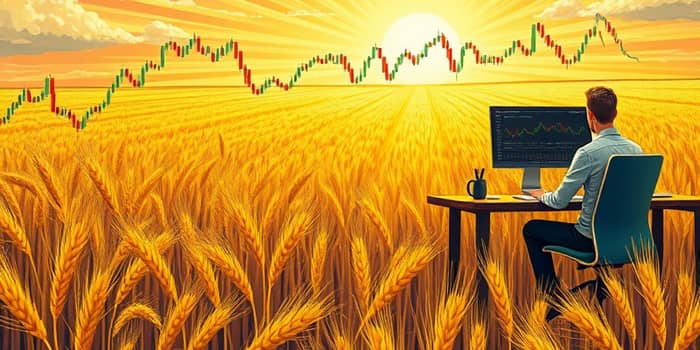
Futures contracts serve as the backbone of many commodity, currency, and financial markets worldwide. From agricultural producers to multinational corporations and independent traders, these instruments help participants balance risk and seize opportunities. By understanding how futures operate, you can harness both the protective power of hedging and the growth potential of speculation.
With proper strategy and discipline, futures trading can transform market uncertainty into a structured environment where clear decisions drive results. Whether you aim to stabilize costs or navigate price fluctuations for profit, this guide offers actionable insights and inspiration rooted in real-world scenarios.
The Power of Futures Contracts
At their core, futures contracts are legally binding agreements to exchange a set quantity of an asset at a predetermined price on a future date. These standardized contracts trade on regulated exchanges, ensuring transparency and reduced counterparty risk through a central clearinghouse.
Two elements define their power: margin requirements and daily settlement. Traders post an initial margin to open a position, then face daily mark-to-market adjustments based on price movements. This mechanism ensures prompt reflection of market changes and safeguards system integrity.
By leveraging these principles, participants can structure complex strategies, from straightforward price locks to advanced spread trading across correlated contracts.
Hedging: Stability Amid Uncertainty
Hedging transforms uncertain future prices into known commitments. For producers and consumers, this certainty can be the difference between breaking even and enduring crippling volatility.
Consider a wheat farmer expecting to harvest 10,000 bushels in six months. Concerned about falling prices, she sells futures contracts now at $5 per bushel. If the market price drops to $4 by harvest, she incurs a $10,000 cash loss but gains $10,000 on her futures position, fully offsetting the decline.
In another scenario, an airline anticipates purchasing millions of gallons of jet fuel over the next year. By buying crude oil futures, the airline caps its fuel budget, insulating its operating costs from unpredictable spikes. This approach provides financial certainty for planning budgets and shields stakeholders from the emotional stress of unexpected price movements.
Speculation: Embracing Opportunity
Speculation channels risk appetite into potential reward. With futures, speculators commit only a fraction of the contract’s value as margin, magnifying the impact of price changes on their capital.
Imagine an independent trader predicting that geopolitical tensions will tighten crude oil supply. He buys ten oil futures contracts at $60 per barrel with an initial margin of $6,000. If prices climb to $65, his position gains $50,000, a sizable return on the $6,000 margin. However, if oil falls to $55, a margin call forces him to add funds or close positions at a significant loss.
Speculators must employ robust risk controls and stop-loss strategies to protect against rapid reversals and margin calls. Success demands continuous adjustment and real-time decision-making.
Market Structure and Regulation
Futures exchanges such as the Chicago Mercantile Exchange and ICE provide structured environments where buyers and sellers interact under strict rules. Markets adhere to position limits, margin requirements, and reporting standards that maintain orderly trading.
Clearinghouses play a crucial role by becoming the counterparty to all trades. This mechanism eliminates credit risk between participants and ensures that margins are managed daily. Regulatory bodies, including the Commodity Futures Trading Commission (CFTC), oversee these activities, enforcing transparency and preventing market manipulation.
Such oversight fosters trust and ensures that futures can serve their economic purpose effectively across diverse sectors.
Advanced Strategies: Spreads and Arbitrage
Beyond basic hedging and directional speculation, traders can employ spreads and arbitrage to profit from price differences. A calendar spread, for instance, involves buying and selling contracts of the same asset with different expiration dates to capitalize on yield curve shifts.
Inter-commodity spreads exploit relationships between correlated assets—such as crude oil and gasoline—to mitigate risk while seeking small, consistent gains. Arbitrage strategies lock in risk-free profits when a price discrepancy arises between two markets or instruments, though opportunities tend to be fleeting and require high-speed execution.
These advanced approaches demand sophisticated analysis, technological tools, and precise timing, but they can yield steady returns with controlled risk when executed correctly.
The Human Element: Psychology and Discipline
No matter how advanced the tools or strategies, trading success often comes down to mindset. Emotions such as fear and greed can cloud judgment, leading to impulsive decisions and costly mistakes.
Disciplined traders stick to their plans, cut losses swiftly, and resist the temptation to overlever. They balance optimism with caution and view every position as part of a broader journey toward long-term objectives.
Maintaining a healthy routine, staying informed without becoming overwhelmed, and reflecting on performance are all part of building the mental resilience needed to thrive in futures markets.
Participants and Tools
Futures markets attract a diverse set of participants. Farmers, miners, and manufacturers hedge their physical exposures, while hedge funds, proprietary trading firms, and retail investors focus on speculation. Central banks and pension funds may also employ futures to adjust portfolio risk and duration.
Modern traders leverage electronic platforms, algorithmic execution, and advanced charting software. Integrating fundamental research with technical indicators empowers participants to make informed decisions under varying market conditions. Staying adaptable to new technologies and data sources can provide a competitive advantage.
Looking Ahead: Embracing Innovation
As technology evolves, futures markets continue to innovate. Blockchain-based clearing, real-time data analytics, and artificial intelligence-driven models are reshaping how participants approach trades. These advancements promise faster execution, deeper insights, robust risk controls and invite both seasoned professionals and newcomers to explore emerging frontiers.
By staying curious and open to new tools, you can maintain a competitive edge and adapt your strategies in line with the next generation of market developments.
Practical Tips for Traders and Producers
Turning theory into effective practice requires consistent effort and reflection. Here are actionable steps to enhance your futures strategy:
- Start with education: enroll in courses or simulation programs to build a solid foundation.
- Define clear objectives: know whether you aim to hedge risk, speculate for profit, or combine both.
- Develop a trading plan: outline entry, exit, and risk parameters before taking any position.
- Maintain a trading journal: document every trade, rationale, outcome, and lesson learned.
- Review and adapt: conduct regular performance reviews and refine your strategy to evolving market conditions.
Final Thoughts
Futures contracts offer a powerful framework for navigating the complexities of modern markets. By mastering both hedging and speculation, you equip yourself with dynamic tools to manage risk, uncover returns, and drive strategic decisions.
Embrace the dual nature of futures as both a shield and a spear. With disciplined approach, continuous learning, and prudent risk management, you can transform market uncertainty into a platform for growth and resilience.
References
- https://highstrike.com/hedging-vs-speculation/
- https://www.cannontrading.com/tools/support-resistance-levels/hedging-with-futures/
- https://fundingsouq.com/ae/en/blog/hedging-vs-speculation-understanding-the-difference/
- https://rjofutures.rjobrien.com/rjo-university/hedging-using-futures-trading
- https://www.tradebulls.in/blogs/futures-options/Hedging-vs-Speculating
- https://tickeron.com/trading-investing-101/what-futures-contracts/
- https://www.youtube.com/watch?v=zEHI4DbsVtY
- https://www.schwab.com/learn/story/basics-trading-futures-contracts
- https://www.gffbrokers.com/speculators-vs-hedgers-a-simple-guide/