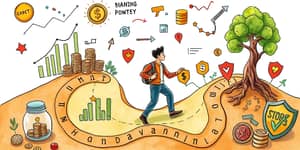
Every financial journey has a turning point, where despair meets determination.
For many, that moment comes when debt feels overwhelming, but the path to financial freedom is clearer than you think.
This article is your guide to rewriting that story, inspired by real people who turned their debts into dollars.
Their successes prove that with the right strategies, anyone can achieve a prosperous future.
Real Success Stories: Proof That It's Possible
Seeing others conquer debt provides hope and a blueprint for action.
Here are anonymized stories of individuals who transformed their finances through dedication and smart planning.
These stories show that no matter the debt size, recovery is achievable with persistence.
Common triggers like divorce or medical bills can be overcome with a solid plan.
Understanding Your Debt: Bad vs. Good
Not all debt is created equal; distinguishing between types is crucial for effective management.
Eliminate high-interest consumer debt first to stop financial leakage and regain control.
Later, you can leverage low-interest debt for assets that grow your wealth over time.
- Bad debt: Credit cards, payday loans with high interest that drain resources.
- Good debt: Mortgages, investment loans used for income-generating assets like real estate.
This mindset shift is key to moving from burden to opportunity.
Strategic Goal-Setting: Your Blueprint for Freedom
Setting clear goals transforms vague wishes into actionable steps toward financial health.
Use the SMART framework to make your objectives specific and time-bound for success.
- Specific: Define exactly what to achieve, like eliminating $45,000 in credit card debt.
- Measurable: Track progress with numbers, such as monthly payments of $1,500.
- Achievable: Ensure goals are realistic based on your income and expenses.
- Relevant: Align goals with long-term vision, like saving for a home down payment.
- Time-bound: Set deadlines, such as paying off debt in 36 months.
This approach provides clarity and motivation throughout your journey.
Debt Management Plans: A Proven Path
Debt management plans (DMPs) consolidate multiple debts into one lower-interest payment, simplifying your finances.
Nonprofit counselors analyze your situation and negotiate rates, often saving thousands in interest.
Consolidate debts into one payment to automate bills and reduce stress significantly.
- Benefits include reduced interest rates, streamlined payments, and professional guidance.
- Programs like GreenPath or ACCC offer budgeting tools without high fees.
- Insurance planning can prevent setbacks from unexpected medical expenses.
This structured support system accelerates debt elimination and restores hope.
Building Your Emergency Fund: A Safety Net
An emergency fund prevents new debt by covering unexpected expenses without relying on credit.
Start small with $1,000 to $2,500, then scale up to cover three to six months of expenses.
Build a robust emergency fund to create financial resilience and peace of mind.
- Step 1: Save initial $1,000 quickly to handle minor crises.
- Step 2: Increase to $2,500 within three to six months for larger buffers.
- Step 3: Grow to $10,000 or more over 18 months for full security.
This fund is your foundation for transitioning from survival to thriving.
Transitioning to Wealth-Building
Once debt is under control, redirect freed cash flow toward investments that grow your net worth.
Shift former debt payments to emergency funds, retirement accounts, or income-generating assets.
Redirect freed cash flow strategically to amplify long-term financial success.
- Invest in stocks, bonds, or real estate for diversification and passive income.
- Use leverage with low-interest debt to purchase assets like rental properties.
- Monitor investments annually and maximize tax benefits for optimal returns.
This phase turns financial stability into lasting prosperity and independence.
Credit Optimization and Accountability
Rebuilding credit is essential for accessing future low-interest debt and achieving financial goals.
Make consistent payments and keep credit utilization low to improve your score over time.
Leverage low-interest debt wisely for opportunities like home ownership or business ventures.
Accountability systems ensure you stay on track with your financial plan.
- Seek professional counseling for expert advice and motivation.
- Engage family support to share the journey and celebrate milestones.
- Conduct frequent reviews to adjust strategies and maintain momentum.
These practices reinforce commitment and align short-term actions with long-term dreams.
Conclusion: Your Turn to Write a New Chapter
Your financial story is not set in stone; it can evolve from debt to dollars with intention.
Embrace the strategies outlined here, from goal-setting to wealth-building, to create a brighter future.
Hope is never lost in the face of financial challenges, as proven by countless success stories.
Start today by assessing your debt, setting a SMART goal, and seeking support if needed.
Turn your narrative into one of empowerment, resilience, and ultimate financial freedom.
References
- https://apfsc.org/how-strategic-goal-setting-can-transform-your-debt-elimination-journey
- https://www.greenpath.com/client-stories/a-debt-management-success-story/
- https://www.the-ifw.com/blog/investment-strategies/use-debt-to-build-wealth/
- https://www.consumercredit.com/about-us/client-stories/conquering-credit-card-debt-with-accc-samanthas-success/
- https://www.finideas.com/from-debt-to-wealth-strategies-for-debt-management-and-wealth-building/
- https://www.moneymanagement.org/iimproving-lives/stories/kathy-d
- https://www.coachingly.ai/blog/single/from-debt-to-wealth-transformative-financial-strategies-for-lasting-change
- https://www.incharge.org/debt-relief/credit-counseling/success-stories/
- https://scm-advisors.com/financial-planning/how-do-you-pay-debt-off-while-building-wealth/
- https://www.accrediteddebtrelief.com/blog/5-debt-success-stories-how-real-people-paid-off-thousands-in-debt-through-debt-consolidation/
- https://lifestylesunlimited.com/lifestyles-unlimited-radio-show-life-after-debt-the-real-journey-to-wealth-begins/
- https://creditcounselingcenter.org/jennifers-success-story-paid-off-30000-in-debt/
- https://business.bankofamerica.com/en/resources/leverage-debt-to-grow-your-business
- https://www.checkbook.org/national/how-to-pay-off-debt/
- https://komonews.com/news/consumer/success-stories-show-how-credit-counseling-helps-americans-conquer-overwhelming-debt
- https://www.beyondfinance.com/blog/this-success-story-captures-the-emotional-benefits-of-debt-consolidation/