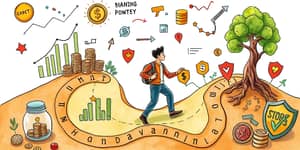
In an ever-changing world, unexpected financial challenges can threaten our peace of mind and stability. Yet, by understanding core principles and adopting practical strategies, anyone can build the strength to withstand economic shocks and emerge stronger.
Understanding Financial Resilience
Financial resilience is more than a reactionary response to emergencies; it’s a long-term ongoing and sustainable process that empowers individuals and families to anticipate, endure, and recover from economic hardships without sacrificing well-being.
Unlike financial fragility, which describes a precarious state where even minor setbacks cause severe distress, resilience hinges on four primary pillars that work together to create a robust safety net.
The Four Pillars of Financial Resilience
Grounded in research spanning 15 countries, these components form the foundation of a strong financial life:
Key Strategies to Build Resilience
Implementing targeted actions across income, savings, budgeting, and borrowing can significantly bolster your financial standing.
- Income diversification: Combine wage work with freelancing, gig roles, or rental income to reduce reliance on a single source.
- Emergency savings fund: Aim to set aside at least three to six months of essential expenses in an accessible account.
- 50/30/20 budgeting: Allocate 50% of income to needs, 30% to wants, and 20% to savings and debt repayment.
- Responsible borrowing: Choose low-interest loans, avoid predatory lenders, and maintain manageable debt levels.
Case in point, rural households in Rwanda stabilized their livelihoods by engaging in off-farm activities and planting drought-resistant crops, effectively building liquid savings in cash or mobile money to navigate seasonal shocks.
Measurable Outcomes of Resilience
Robust research highlights three tangible benefits of financial resilience:
- Reduced financial fragility, evidenced by the ability to cover a $2,000 expense within a month without undue hardship.
- Enhanced life satisfaction, with resilient individuals reporting lower financial stress and higher well-being.
- Improved long-term stability, marked by decreased reliance on high-interest credit and stable asset accumulation.
Real-World Applications
Across diverse contexts—from high-income nations to emerging economies—effective resilience strategies yield impressive results.
In high-income countries, households that combined emergency savings with diversified income streams and solid budgeting frameworks navigated the pandemic’s economic turmoil more effectively. Stimulus measures and unemployment benefits provided crucial backstops, though gaps remain for freelance and gig workers.
In low- and middle-income regions, strengthening social protection systems, promoting affordable microinsurance, and enhancing access to formal banking have proven essential. For example, Kenyan farmers with financial literacy still faced obstacles due to limited banking infrastructure—a reminder that financial knowledge and behavior encompass only part of the solution, and structural access is equally vital.
Policy Recommendations and Future Directions
Designing robust policies requires tailored approaches:
- In high-income settings, expand financial education, regulate predatory lending, and incentivize employer-based wellness programs.
- In lower-income regions, strengthen social safety nets, develop inclusive insurance products, and reduce structural barriers to formal financial services.
Cross-cutting solutions include embedding financial protections within universal health coverage, implementing automatic savings nudges to overcome behavioral biases, and fostering collaboration between governments, healthcare systems, and financial institutions. By formalizing informal support networks with smart regulations, policymakers can amplify the impact of grassroots resilience efforts.
Moreover, future research should explore the intersection of digital financial services with resilience-building, examine gender and cultural factors, and deepen our understanding of how financial health interlinks with physical and mental well-being.
Ultimately, strengthening social capital community support institutional aid and ensuring equitable access to financial products are the keystones of a society that thrives in the face of adversity. With dedication, informed planning, and supportive systems, every individual can transform setbacks into opportunities for growth and long-lasting security.
References
- https://pmc.ncbi.nlm.nih.gov/articles/PMC12403627/
- https://www.hopecu.org/articles/building-financial-resilience-how-to-navigate-financial-challenges/
- https://climate.sustainability-directory.com/term/financial-resilience/
- https://www.nerdwallet.com/finance/studies/data-resilience-economy
- https://personetics.com/importance-of-financial-resilience/
- https://www.breadfinancial.com/en/financial-education/responsible-saving/building-financial-resilience.html
- https://retirement.govt.nz/financial-capability/what-is-financial-capability/financial-resilience
- https://enrichhk.org/what-financial-resilience