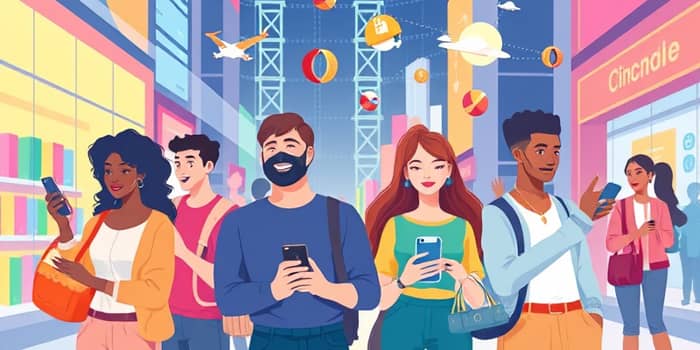
The year 2026 heralds a transformative era in consumer behavior, where economic pressures and technological advancements converge to redefine how people spend and engage with the world.
With 32.8% of global shoppers feeling financially worse off and 73% citing rising cost-of-living pressures, the focus has shifted sharply towards value-conscious, intentional spending that prioritizes essentials over excess.
This is not merely a trend but a profound evolution, driven by a recessionary mindset that challenges traditional brand loyalty and demands greater transparency from businesses.
As inflation ripples through daily life, consumers are becoming more strategic, seeking out deals, private labels, and affordable segments to stretch their budgets.
Over 60% of shoppers now prioritize affordability, yet over 40% are willing to pay more for products that align with their values, revealing a nuanced balance between price and principle.
This delicate dance between caution and desire is reshaping markets, forcing companies to adapt with innovative approaches that resonate on both emotional and practical levels.
Intentional, Value-Seeking Spending
In an era marked by financial uncertainty, consumers are adopting a more mindful approach to their purchases, focusing on what truly matters.
Economic stability has become a top priority, overshadowing environmental concerns that have dropped from the fourth to ninth spot in global worries.
This shift is prompting brands to offer clear benefits and transparent pricing to build trust and loyalty.
- Leverage data to tailor promotions and discounts for budget-conscious segments.
- Simplify product lines to reduce choice overload and enhance decision-making.
- Highlight value propositions that emphasize long-term savings and quality.
By addressing these needs, businesses can foster deeper connections and drive sustainable growth in a competitive landscape.
Personalization and Hyper-Segmentation
Consumers increasingly crave tailored experiences that reflect their unique identities and preferences.
With 64% preferring personalized interactions and 71% expecting them, the demand for customization is at an all-time high.
However, this comes with privacy concerns, as 39% see benefits outweighing risks, while 32% remain uncomfortable with data tactics.
Brands like Nutella have excelled by offering customized jars that foster emotional loyalty and self-expression.
- Use AI-driven insights to deliver relevant recommendations without compromising privacy.
- Implement low-effort personalization strategies that feel human-centered and authentic.
- Segment audiences based on financial and lifestyle data to create hyper-targeted campaigns.
Embracing this trend can lead to increased sales, with 40% of consumers buying more when experiences are personalized.
Comfort, Simplicity, and Low-Effort Experiences
Amid daily stress reported by 58% of people, consumers are seeking emotional reassurance and streamlined choices.
The desire for simplicity is driving demand for frictionless shopping paths and fewer product options.
This trend emphasizes convenience over complexity, allowing shoppers to save time and mental energy.
- Design omnichannel journeys that are seamless and intuitive across all touchpoints.
- Reduce SKU counts to minimize confusion and enhance the shopping experience.
- Focus on speed and efficiency to cater to mission-driven, frequent trips.
By prioritizing comfort, brands can alleviate consumer anxiety and build lasting trust.
Tech-Enabled Wellness and Health
Technology is revolutionizing how consumers approach health, with data-driven solutions gaining prominence.
The rise of GLP-1 trends has boosted protein and fiber sales, as users outspend non-users by 25% on items like protein shakes.
Multicultural and global flavors are also on the rise, reflecting a broader shift towards holistic well-being.
- Integrate AI fitness and formulated beauty products to meet clinical-level demands.
- Promote natural and calming products to address stress-related needs.
- Adapt grocery offerings to include more protein-rich and culturally diverse options.
This focus on wellness not only improves lives but also opens new revenue streams for forward-thinking companies.
Social Commerce and Omnichannel Integration
Social platforms are becoming primary discovery channels, with 17% of online sales expected via social media by 2026.
Livestream shopping in the U.S. is valued at approximately $70 billion, showcasing the power of shoppable content.
Examples like TikTok Shop generating $2 million in 12 hours for P Louise highlight the explosive potential of this trend.
- Incorporate livestreams and user-generated content to engage audiences authentically.
- Ensure seamless integration between social media and e-commerce platforms.
- Leverage reviews and UGC, trusted by 79% over brand content, to build credibility.
By embracing social commerce, brands can tap into vibrant communities and drive impressive sales growth.
Experiences Over Products
Consumers are increasingly prioritizing memorable experiences, such as travel and dining, over material goods.
Spending on experiences is growing faster than on products, with Airbnb booking 491 million nights valued at $82 billion.
This shift reflects a deeper yearning for connection and joy in an uncertain world.
- Develop immersive offerings that cater to the desire for adventure and relaxation.
- Partner with experience-based brands to create bundled packages.
- Use storytelling to highlight the emotional benefits of experiences over possessions.
Focusing on experiences can differentiate brands and foster loyal, engaged customers.
Retail and Grocery Specifics
In retail, there's a rediscovery of basics like milk and butter, driven by a need for reliability and value.
Grocery trends include a focus on protein and multicultural cuisine, adapting to demographic shifts and health priorities.
Low population growth and rising healthcare costs are pressuring budgets, making efficiency key.
- Implement data differentiation strategies to optimize assortments by region and store.
- Introduce selective innovation that balances novelty with affordability.
- Enhance private label offerings to compete with national brands on price and quality.
Adapting to these specifics can help retailers thrive in a rapidly evolving market.
Emerging Predictions and Global Context
Looking ahead, trends like anti-algorithm movements and new young demographics are set to reshape consumer landscapes.
There's a growing affection deficit, prompting brands to build authority through authentic engagement rather than traditional demand generation.
Tech demand is shifting to Europe and MEA regions, indicating global variations in consumer behavior.
- Monitor global predictions to stay ahead of cultural and technological shifts.
- Foster genuine connections to address the need for human interaction and trust.
- Adapt strategies to local contexts, considering economic and social factors.
By anticipating these changes, businesses can position themselves for long-term success and relevance.
In conclusion, the demand shift in 2026 presents both challenges and opportunities for businesses willing to adapt.
By embracing value-conscious strategies and personalized experiences, companies can build resilience and foster loyalty.
The key lies in understanding consumer pain points, leveraging technology wisely, and creating authentic connections that transcend transactions.
As we navigate this new era, let innovation and empathy guide the way to a brighter, more engaged future.
References
- https://nielseniq.com/global/en/news-center/2026/consumer-tech-growth-to-reset-in-2026-as-demand-shifts-to-europe-and-mea/
- https://escalent.co/blog/top-consumer-trends-2026-market-research-insights-brands-need-to-build-winning-strategies/
- https://www.experian.com/blogs/marketing-forward/what-2026-consumer-insights-mean-for-marketers/
- https://www.library.hbs.edu/working-knowledge/eight-trends-for-2026-pricing-passion-and-the-risks-ahead
- https://www.simon-kucher.com/en/insights/top-consumer-retail-trends-watch-2026
- https://www.customerexperiencedive.com/news/6-customer-experience-trends-2026/808761/
- https://blog.thatagency.com/consumer-behavior-trends-2026
- https://www.grocerydive.com/news/8-top-trends-grocery-industry-2026/807564/
- https://www.startus-insights.com/innovators-guide/consumer-behavior-trends/
- https://www.lippincott.com/ideas/12-trends-set-to-define-2026/
- https://www.mintel.com/insights/consumer-research/global-consumer-trends/
- https://www.mckinsey.com/industries/retail/our-insights/state-of-fashion
- https://www.gwi.com/connecting-the-dots