For decades, Gross Domestic Product (GDP) has been the dominant metric for economic success, guiding policies and shaping global narratives.
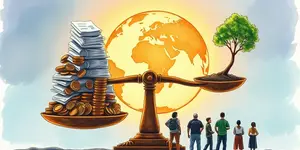
However, this narrow focus often overlooks the broader dimensions of human flourishing, leaving critical aspects like happiness and sustainability in the shadows.
By exploring alternative indicators, we can foster a more inclusive and resilient vision of progress that benefits both people and the planet.
The Limitations of GDP
GDP measures total national spending on final goods and services, but it fails to capture the full picture of prosperity.
It ignores distinctions between activities that enhance well-being and those that detract from it, such as pollution or crime.
This metric equates economic growth with progress without accounting for happiness, health, or education.
Unpaid work like household labor and volunteer efforts are completely excluded, undervaluing essential contributions to society.
Environmental degradation and resource depletion are also overlooked, leading to unsustainable practices.
Since 1970, global GDP has doubled, but resource extraction has tripled, highlighting the unsustainable costs of traditional growth.
Key limitations of GDP include:
- It does not measure happiness or welfare.
- Health and education impacts are ignored.
- Unpaid work and community vitality are excluded.
- Environmental costs like pollution are not accounted for.
- Non-monetary aspects such as arts and culture are neglected.
A New Vision: Alternative Indicators
To address these gaps, numerous alternative indicators have emerged, offering a more holistic view of economic progress.
These metrics incorporate environmental, social, and well-being factors to provide a comprehensive assessment.
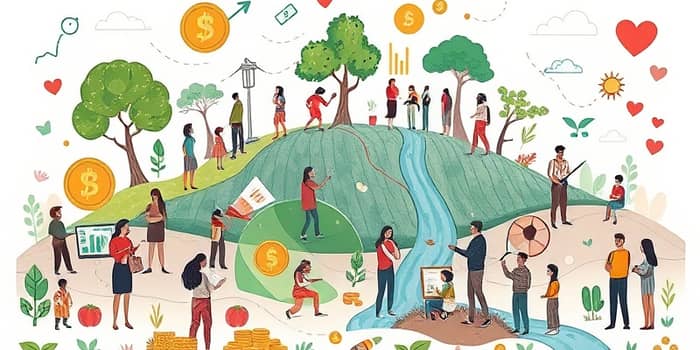
By shifting focus from mere output to human capabilities and sustainability, they redefine what it means to thrive.
These indicators highlight the urgent need for diversified metrics in policy-making and public discourse.
Real-World Adoptions and Examples
Across the globe, cities, states, and countries are beginning to adopt these alternative measures to guide their development.
This shift demonstrates a growing recognition that true progress requires multifaceted approaches beyond economic output.
Examples of adoption include:
- U.S. cities such as Akron, Cleveland, and Baltimore implementing GPI reports.
- States like Hawaii and Vermont using GPI to inform local policies and investments.
- Countries like New Zealand embedding the Living Standards Framework into national strategies.
- Global initiatives such as the OECD Better Life Index covering 41 nations.
- C40 cities network experimenting with social and environmental progress metrics.
While full policy adoption is still in proof-of-concept phases, these efforts pave the way for broader change.
Benefits for Policy and Sustainability
Embracing alternative indicators offers numerous advantages for creating more equitable and sustainable societies.
They enable better decision-making by valuing human and natural capital alongside financial metrics.
Key benefits include:
- Redefining thriving economies to include sustainable consumption patterns.
- Providing policy guidance that aligns with intergenerational equity.
- Fostering public conversations about what truly matters for community well-being.
- Evaluating investments based on holistic outcomes rather than short-term gains.
- Normalizing stakeholder involvement from businesses, labor, and communities.
This approach supports debt relief, green financing, and inclusion of small states in global dialogues.
City and State Roles with Business Ties
Local governments play a crucial role in promoting and implementing these new metrics for regional impact.
They can develop localized versions, adjust policies, and convene stakeholders to drive change.
Businesses are also stepping up, with models like B Corps and worker-owned co-ops emphasizing higher accountability.
For instance, the Cleveland Model integrates green practices and fair pay into its operations.
Roles for cities and states include:
- Promoting and publicly reporting on alternative metrics.
- Adjusting local investments to reflect social and environmental priorities.
- Advocating for regional adoption to create cohesive progress frameworks.
This collaboration ensures that economic activities contribute positively to all aspects of life.
Challenges and Criticisms
Despite their potential, alternative indicators face significant hurdles that must be addressed for widespread adoption.
Subjectivity in design and interpretation, such as reliance on surveys, can lead to inconsistencies.
Lack of standardization and data consistency hampers scalability and cross-comparisons between regions.
Criticisms include:
- Arbitrary trade-offs in metrics like HDI or BLI that may not reflect local contexts.
- Political and institutional barriers that resist change from traditional GDP-focused systems.
- Financial constraints in developing and maintaining comprehensive data sets.
- Risk of disadvantaging small economies if not carefully implemented.
Mitigation strategies involve using mixed suites of indicators, such as combining GDP with ecological footprints.
Multilateral efforts for standardization, led by organizations like the UN, can help overcome these challenges.
Global Momentum and Recommendations
The movement beyond GDP is gaining traction worldwide, with growing calls for a more inclusive approach to measuring progress.
Events like Beyond GDP summits bring together diverse stakeholders to champion this cause.
Initiatives from the EU, OECD, and UN are pushing for environmental and social indicators to complement economic data.
Key trends include:
- Complementing GDP with alternative metrics rather than replacing it entirely.
- Fostering multilateral cooperation to ensure coherence and global adoption.
- Including youth and underrepresented groups in metric development for broader perspectives.
Recommendations for action involve establishing UN-led committees on metrics and committing to frameworks at global summits.
By embracing this holistic vision, we can build a future where economic progress nurtures both people and the planet, ensuring resilience and well-being for generations to come.
References
- https://sustainableconsumption.usdn.org/initiatives-list/alternative-economic-indicators
- https://sdg.iisd.org/news/beyond-gdp-alternative-metrics-better-outcomes-for-people-and-planetek1ha2/
- https://www.stlouisfed.org/open-vault/2023/apr/three-other-ways-to-measure-economic-health-beyond-gdp
- https://www.thebeyondlab.org/article/whats-next-on-beyond-gdp-2
- https://unu.edu/cpr/report/beyond-gdp-and-multidimensional-vulnerability-index
- https://joint-research-centre.ec.europa.eu/projects-and-activities/beyond-gdp-delivering-sustainable-and-inclusive-wellbeing_en
- https://www.oecd.org/en/topics/policy-issues/well-being-and-beyond-gdp.html
- https://www.c40knowledgehub.org/s/article/Beyond-GDP-How-your-city-can-use-alternative-measures-of-social-environmental-and-economic-progress